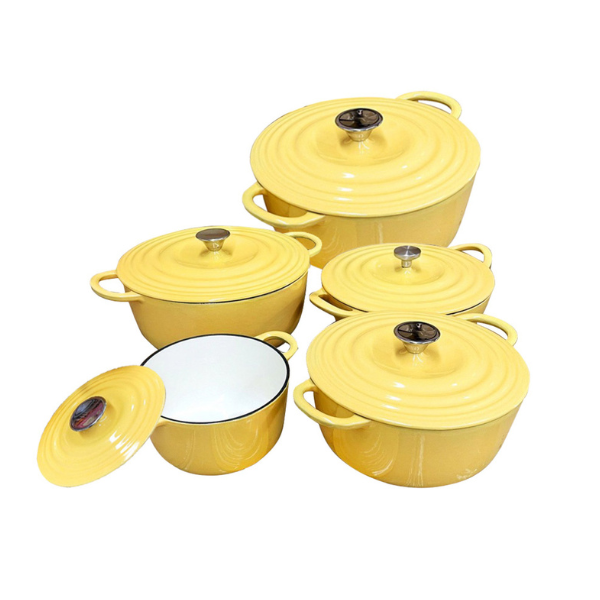
You do not have to choose between the weight rule and the moisture rule; you have to apply them to different surfaces. Build the load as a box inside a box. Enameled cartons form the shell: the floor tier, the top tier under the roof, the door-end block, both outer columns against the side walls, and the row against the front wall. Pre-seasoned cartons fill the core: the interior columns behind that row, from the second tier up to the tier below the enameled top. Only the shell meets condensed water, and enamel is the only family that tolerates it. Three checks decide whether the plan survives: whether the shell’s floor cartons are heavy enough to hold the center of gravity low once you rank cartons rather than families; whether desiccant is sized to the air and packaging around the core; and whether voyage length plus dwell justify a sealed barrier.
Why Do the Weight Rule and the Moisture Rule Collide in a Mixed Load?
Both rules are sound and usually written as one. They are not. The weight rule answers what can carry what: dense cartons low, light cartons high. The moisture rule answers what is touching what: bare iron must not sit in air that touches steel.
Run both and the same carton answers twice. The lightest cartons — in most orders the pre-seasoned block — are pushed upward onto the tier where the roof drips, and toward the door end, the wettest part of the container. The cargo safest to drop sits where it is least safe to be.
Warm air holds more water vapor than cold. When the shell falls below the dew point of the air inside, water condenses on the roof and upper walls and drips onto the top layer; the Container Handbook’s chapters on container climate set out the cycle. Two details matter: the headspace above the cargo is a small, sealed, humid chamber under the roof, and the door end and floor are separate risk surfaces — one an air-exchange path, the other a carrier of pallet moisture.
Which Tier and Which End Should Each SKU Occupy?
Rank cartons twice — by what they carry, by what they survive — then place each where both agree.
| Position | Weight logic | Moisture logic | Assign to |
|---|---|---|---|
| Floor tier, full length | Heaviest cartons in the order | Floor sweat and pallet moisture | Enameled Dutch ovens, 12–18 lbs, the heaviest pieces |
| Top tier, under the roof | Lightest cartons in the shell | Direct drip zone | Enameled casseroles 8–10 lbs, then skillets 5–7 lbs |
| Door-end block, full height | Never the heaviest; needs restraint | Highest humidity, most air exchange | Enameled only |
| Both outer columns, against the side walls | Shell, full height | Wall contact and runoff | Enameled cartons |
| Front-wall row, all tiers | Shell, all tiers | Blind-end contact | Enameled cartons |
| Interior core, second tier up, behind the front row | Medium weight; the stack core | Shielded on every face | Pre-seasoned: Dutch ovens 10–15 lbs below skillets 4–8 lbs |
The enameled cartons close a shell on every face; the pre-seasoned block sits inside it, touching no steel and meeting no drip.
Accept that the shell may be heavier than the core. The plan puts enameled cargo on the top tier even when a pre-seasoned carton is lighter, because the top tier is the drip zone and enamel is what tolerates it. The weight rule is applied inside each block, not across the whole load: enameled Dutch ovens at 12–18 lbs go to the floor, casseroles and skillets stack above them, and the core’s own sequence runs pre-seasoned Dutch ovens below pre-seasoned skillets. What must never happen is the reverse — a bare-iron carton on the roof tier or in the door column — no matter how light it is.
Rank cartons, not families. Per-piece weights overlap — enameled skillets run 5–7 lbs, pre-seasoned skillets 4–8 lbs — so the category cannot tell you which carton is lighter. Within a family the figures are decisive: enameled Dutch ovens at 12–18 lbs sit below casseroles at 8–10 lbs and skillets at 5–7 lbs; pre-seasoned Dutch ovens at 10–15 lbs sit below skillets at 4–8 lbs. Across families, use per-carton gross weight from the packing list and run the center-of-gravity check: if the heaviest cartons are pre-seasoned, the shell cannot hold them at the floor.
Not every surface on an enameled piece is necessarily coated. The fired coating makes the family water-tolerant, but on many shapes the rim, lid seat or inner handle stays bare. Check the sample and the spec sheet, not the category: a SKU with an uncoated seating edge belongs inside the shell, not on it. Confirm the coated surfaces in the enameled cast iron range before the bay plan is signed.
Respect the carton’s stacking limit too: compression sets it, not weight. If the enameled share cannot close the shell, close the gaps with liner board and treat them as wet zones.
How Do You Size Desiccant to the Pre-Seasoned Block Instead of the Whole Container?
Sizing desiccant to the container’s nominal volume is the most common error in a mixed load: the easiest calculation to run, and the wrong question. The control volume is the air and packaging around the core. Four inputs:
- Free air, not nominal volume. Subtract the displacement of pallets and cargo: in a cast iron load that subtraction is large, and the remaining air sits in the headspace and along the walls.
- Water in the packaging. Board, labels, paper wrap and timber pallets release moisture as the box warms. Ask for the board moisture figure and kiln-drying evidence: a damp pallet is a reservoir under the heaviest tier.
- Water that gets in. Door seals, roof seams, and the air exchanged whenever the doors are open. Loading in a humid spell puts the water inside before the doors close.
- Time and temperature cycles. Voyage length, day–night cycles, and the one buyers forget: dwell at destination.
Those inputs feed one equation, in grams. The air term is free air volume in cubic meters times air density in kilograms per cubic meter times the humidity you must remove, in grams per kilogram of air. The packaging term is packaging mass in kilograms times the moisture fraction it will lose, times 1,000. The ingress term repeats the air term once per expected air change. Add the three, divide by the capacity of one desiccant unit at your target humidity over that duration, and add a margin for dwell. Ask for the capacity curve, not a single rating: a unit absorbs far more at high humidity than at low.
Placement matters as much as quantity. Put units in the upper load over the core: warm air stratifies upward, so a bag on the floor treats the driest air. Spread them along the length and at both ends, suspend them from lashing points, and install them last.
When Should a Moisture Barrier Replace Desiccant?
A barrier changes the problem from drying the container to drying the bag, which is a much smaller calculation.
Use a barrier when three things hold at once: the core is small enough to enclose, voyage plus dwell is long enough that desiccant alone would need a large quantity, and the receiving site accepts sealed units. A sealed liner with desiccant inside then protects the iron with a fraction of the desiccant, independent of the door seals.
Do not treat the barrier as a substitute for desiccant inside it. A bag closed over humid air traps that air against the iron, which is often worse than no bag. The barrier cuts the exchange; the desiccant handles the water inside.
Price in the costs: film and labor, corner protection for cast iron edges, a seal check on a sample of bags, and the loss of inspection access — nobody sees the product until destination. A polyethylene liner is only a vapor retarder; a foil laminate is the high-barrier option. Either way the liner goes in before the first pallet, so the sequence changes.
How Do Loading and Unloading Sequence Trade Against Each Other?
The vertical split is fixed by physics; the longitudinal split is a business decision.
Plan A — core at the blind end. Load the floor tier and the front row first, then the core, then close the top tier last. The bare iron never sits in the door opening while the container is worked. The cost arrives at destination: last in is last out, so the core leaves when the box is half empty and the desiccant is near the end of its capacity — the SKU least tolerant of moisture meets the worst conditions of the journey in its final hour.
Plan B — reverse the zones so the core comes out first. This is not the same plan with two blocks swapped: it deliberately breaks the door-end rule, so pre-seasoned cargo ends up in the wettest position and must be rebuilt as a wet-zone block — sealed liner, desiccant inside the liner, restraint because a light block at the door shifts, and a receiving team that opens it first. You are trading the shell for discharge order.
With a dock, covered inspection and a team that processes the container in one shift, the shell as drawn is cheaper and safer. If it will be opened in the open or held over a weekend, Plan B with a barrier is more defensible. Either way, put the discharge sequence in the purchase order: “first out” is a promise about the receiving team, not a loading instruction.
What Should Be on Paper Before the Doors Close?
A mixed load is only as good as its record. Keep these with the shipment:
- A bay plan — tier, row and position with the SKU in each block, signed off before loading.
- Carton data — per-carton gross weight, dimensions and stack layers for every SKU, or the weight side is an assumption.
- A container condition report — photographs of floor, walls, roof and seals before the first pallet.
- Pallet moisture evidence — kiln-dried or heat-treated, moisture content stated.
- A desiccant record — units, positions and installation time, cross-referenced to the calculation.
- A pre-shipment inspection report before the doors close. Meiloz prepares its own, and buyers can appoint a third-party inspector; the manufacturing and OEM page describes that stage.
- Seal number and door photographs, with the name of whoever sealed the container.
- A receiving protocol — who opens the container, who photographs the load before unloading, and what counts as a claim.
None of this replaces product compliance: Meiloz’s cookware meets FDA and LFGB food contact safety standards, and its factory is BSCI-certified. That says the pan is safe to sell, not that the carton arrived dry.
FAQ
Can I put pre-seasoned cartons on the top tier if they are the lightest SKU?
No, not while the shell holds. If the enameled share cannot fill the top tier, close it with liner board, put a barrier over the cartons and size the desiccant for that position. Expect to replace any carton that takes a drip: the seasoning is a thin, baked oil film over bare iron.
Is it safe to put enameled cartons on the container floor?
Yes. The floor is an enameled position by design — not because enamel likes water, but because it survives it: a drip on fired enamel is a carton problem, a drip on seasoning is a rust problem. The limits are the pallet and carton.
How much desiccant does one container need?
There is no single figure. Anyone quoting one without asking about free air volume, packaging moisture, voyage length and dwell is guessing. Ask for the calculation and the capacity curve.
Does container rain only happen on cold routes?
No. The trigger is the shell dropping below the dew point of the air inside, which happens whenever a warm, humid load cools — on tropical routes at night, and in containers standing in the sun.
Can I mix enameled and pre-seasoned cartons on the same pallet?
Don’t. It breaks the block logic: the pallet becomes a mixed unit, and neither ranking applies to it.
Does the enamel coating remove the rust risk completely?
For the coated surfaces, yes; for the rest, no. Any rim, seat or edge the enamel does not cover is bare iron, and a chipped patch is bare iron again. Tolerant is not immune.
If you are building a mixed order, start from the surface that has to survive the voyage: review the pre-seasoned cast iron range and confirm which surfaces are coated before the bay plan is fixed.
Source this at Meiloz