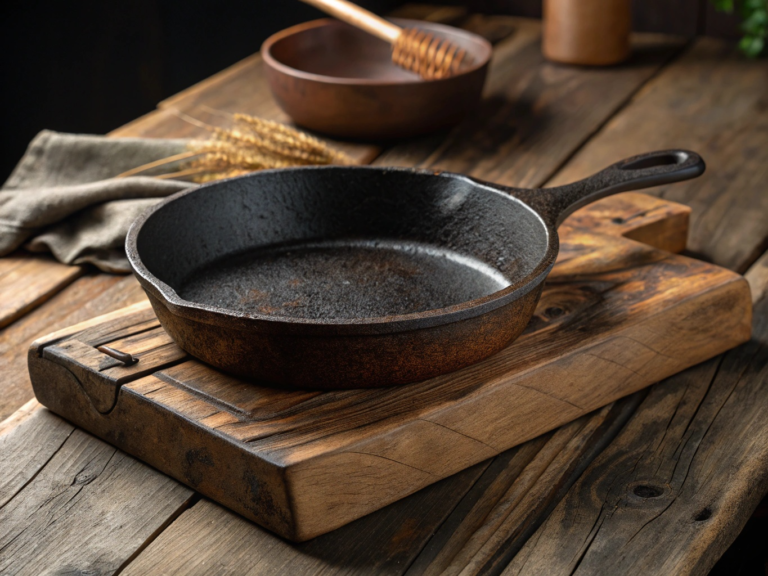
A test report is a laboratory record: one sample, described in the lab’s own words, tested on stated dates against stated methods, with the results written down. FDA compliance is a legal status the finished goods must hold when they enter the market. FDA does not issue a certificate for finished cookware, so the obligation attaches to the food-contact substances in the pan, not to a document on your desk. Three checks decide whether the report reaches your container: the lot code on the report must also appear on the carton label and the packing list; a sealed retained sample from that lot must exist on both sides; and the supplier must be contractually required to notify you before changing anything that touches the food-contact surface. Without those, a valid report describes a pan, not your pan.
What Does a Test Report Prove, and What Does It Leave Out?
A test report answers one narrow question: on the day the laboratory received that sample, did it meet the limits in the methods it ran? A usable report names the laboratory, describes the sample as submitted, gives results against those limits, and carries a report number the laboratory will confirm. For cast iron cookware sold into the United States, the tests in play are usually migration from the food-contact surface and, on an enameled or seasoned piece, the composition of the coating itself; the US framework for coatings in food contact sits in 21 CFR Part 175.
What it does not do is name your purchase order, your production date or your container. It carries no conclusion that the goods you are shipping are compliant, because it has never seen them. That conclusion is reached by the party placing the goods on the market, which on a private-label program is normally you.
The definitional difference is easy to state and rarely the reason a container is held. The operational question is narrower: how does a report on a sample become evidence about the goods in the box? Meiloz states that its cookware meets FDA and LFGB food contact safety standards and that its factory is BSCI-certified; it runs a final inspection with a report of its own or accepts a third-party inspection you arrange, as described on the Hersteller von gusseisernem Kochgeschirr page.
Why Doesn’t a Report on One Sample Cover the Container You Are Shipping?
A report is timestamped to a configuration, not to an order. Between the sample and your container, six things move, and each one changes the object the report describes.
- The seasoning oil. On a pre-seasoned pan the baked vegetable-oil layer is the food-contact surface; the iron underneath is not what food touches. A new oil supplier or a changed baking cycle produces a surface that was never tested. Meiloz’s seasoned line is coated with vegetable oil and baked at high heat, which is exactly the layer a migration test measures.
- The enamel formulation. A Pantone colour change is not cosmetic. Fired enamel is a glass coating; a new pigment or frit supplier is a new food-contact composition, and a report on the old colour does not describe it.
- The iron charge. Different scrap ratios and supplier heats change the trace elements in the metal, and migration results follow the metal.
- Tooling and cavity. A repaired pattern, a new mould for a new size or a transferred part is a new part, even when the drawing number did not change.
- The site or line. A second line, a subcontractor or a shift in plant is a change of process control, and process control is what keeps a tested sample representative.
- The sample itself. Ask whether the unit sent to the lab came off a production run or was made up for the test. A hand-finished sample is a sample of the sample.

None of these changes invalidates the report. That is the trap: the document remains genuine, the report number still checks out, and the goods in the container are no longer the goods it describes. Arguing about whether the report is real is arguing about the wrong thing. The question is whether it is current for this lot, and only a paper trail answers it. The test methods themselves are covered in how cast iron factories pass FDA and LFGB testing; this article covers what comes after.
Which Identifiers Must Match Before You Accept a Report?
Accept a report only when one lot code appears in three places and the three agree: a three-way match across the report, the carton and the packing list. It turns a sample report into lot evidence for minutes of packing-line work.
| Where it appears | What it must show | What fails when it doesn’t |
|---|---|---|
| Laboratory report | Order reference, SKU, lot code, sample description, production date, report number | A report with no lot code can be attached to any shipment, including one it never covered |
| Carton and inner label | The same lot code, SKU, production date, packed quantity and batch record reference | A carton carrying only a SKU cannot be tied to a tested lot |
| Packing list | The same lot code against each carton line, with SKU, carton count, shipped quantity, container and seal number | If the packing list carries no lot, or its container and seal numbers do not match the bill of lading, nothing downstream reconciles |
Dates matter as much as numbers. The lot’s production date must fall before the laboratory’s sample receipt date, and the sample receipt before the shipment date. A report whose sample receipt predates the lot’s production date is a template with numbers typed into it, not evidence. Confirm the report number and client name with the laboratory directly.
Where a factory resists lot coding, treat it as a finding: without it, no report can be tied to a carton later.
How Do You Build a Retained-Sample Set That Actually Works?
A retained sample is the physical counterpart of the report. Its job is to make a future dispute answerable: if a customer or a regulator finds a problem later, you can test a unit from the same lot and compare it with the unit the laboratory tested.
- Drawn from the packed lot, not the line. A finished, boxed unit taken after packing, from cartons whose IDs are written down.
- Sealed and labelled. A tamper-evident bag or tin, labelled with SKU, lot code, order number, packing date, the sealer’s initials and the report number it belongs to.
- Photographed in place. The sealed sample beside the carton label, lot code legible in the same frame. This is the photograph that settles an argument later.
- Held on both sides. One set with the factory, one with you or your inspection agent. A single set held by the seller is not a control.
- Logged. A register of who broke which seal, when and why. An unbroken seal means something only if the log is kept.
- Kept for as long as the line is sold, plus whatever your market’s record-keeping rules require; put the retention period you need into the agreement.
Keep two reference samples apart. The approved sample, signed off before production, defines what was agreed: colour, surface, logo depth, weight. The retained lot sample, drawn from the shipment, defines what was made.
What Should the Change-Notification Clause Say?
This is the clause most purchase orders omit, and it is the one that keeps a report alive. Its purpose is to make silent substitution a breach rather than a surprise.
| Element | What to write | Why it matters |
|---|---|---|
| Definition of change | Any change to iron source or charge, seasoning oil or its baking process, enamel formulation or colour, pattern or tooling, site or subcontractor | Leaves no room to argue that only a vendor changed |
| Notice timing | Before the first affected unit is produced, and before a repeat order is confirmed | A notice arriving with the shipping documents is not a notice |
| Content of notice | Description, effective lot range, effective date, technical reason and supporting evidence | Turns a vague email into a document you can file against a lot |
| Re-test obligation | Which tests, commissioned and paid by whom, and whether the buyer may hold affected lots | Decides who carries the cost of proving the change is safe |
| Buyer’s options | Accept, require testing, reject the affected lots or cancel open quantity | Gives the clause a consequence |
Write the triggers to match what happens on a foundry floor: oil is bought in batches, enamel is mixed to a colour, patterns are repaired, and overflow capacity lands on another line. Each is ordinary and invisible to you unless the clause names it. Settle who pays for a re-test before you need one: the supplier when the change is its own, the buyer when the change is a request.
How Do You Sample the Lot Before Shipment?
Pre-shipment sampling closes the loop: it produces the retained sample, the carton record and the inspection report that stand behind the lot code on the packing list.
- Fix the inspection plan before production. Separate the characteristics checked on every lot (packing, count, carton condition, edge finish, seasoning coverage, logo legibility) from those verified only on change (migration, coating composition). Without that split, a visual check gets mistaken for a safety check.
- Pull across the lot, not from one pallet. Select cartons from different positions and write their IDs down. A sample from the top layer of one pallet describes one pallet.
- Record what was drawn. Lot code, carton IDs, quantity sampled, sample size, acceptance criteria and the result, on one page, signed.
- Seal and split the retained sample while the inspector or the factory’s QC lead is present, then photograph it against the carton label.
- Reconcile with the shipping documents. The packing list must carry the lot code for each carton line, and its container and seal numbers must match the bill of lading before the container leaves.
Meiloz runs final inspection and produces a report, or accepts a third-party inspection arranged by the buyer; its stated process allows 1–2 days for inspection and testing and advises booking a third party earlier. Standard orders run 35–55 days and complex custom designs 45–60, so the inspection date belongs on the calendar at order confirmation. On custom work the 60% balance is released against the bill-of-lading copy after you have reviewed the pre-shipment inspection photos and report, which puts the evidence in front of the payment instead of behind it.
FAQ
Is a test report the same as FDA certification?
No. FDA does not certify finished cookware, so there is no certificate to ask for. A report is evidence that a described sample passed described tests; compliance is the status of the goods you place on the market, and your declaration states it.
Does an old report stop being valid?
No fixed expiry applies to the document itself. The useful question is whether the product has changed since the sample was tested. A report covering the configuration you still buy, with an unbroken change log behind it, says something useful; a recent report on a configuration you no longer buy says nothing.
Can I rely on the factory’s own inspection report?
For lot identity, packing and workmanship, yes, and Meiloz produces one as part of final inspection. For migration evidence, use a third-party laboratory.
What if the cartons carry no lot code?
Then the report cannot be joined to the shipment. Ask for lot coding as an order condition. If the factory cannot print it, have the inspector apply and record labels at packing so that cartons, sample and shipping documents share one identifier.
Does the retained sample have to come from the shipped lot?
Yes, or it proves nothing about the container. A sample from a pilot run protects the pilot run. The sample that matters comes from the packed cartons whose IDs appear on the packing list.
Build the evidence pack before you build the order, and see how Meiloz approaches FDA and LFGB testing when you compare suppliers.
Source this at Meiloz